Biological crop protection and biostimulants are rapidly reshaping modern agriculture, offering more sustainable and resilient alternatives to conventional inputs. As regulatory requirements evolve and growers seek to improve soil health, crop resilience and productivity, biological solutions are gaining momentum across global markets.
To explore the opportunities and challenges shaping this transition, the Kestria Agribusiness & Agrisciences Global Practice Group brought together industry leaders to discuss the key drivers of adoption, evolving regulatory frameworks, the role of education and collaboration, and the practical steps needed to accelerate the shift towards more sustainable agriculture.
Key takeaways:
- Education builds adoption. Trust in biological solutions depends on knowledge, field trials and technical support.
- Smarter regulation drives innovation. Efficient regulatory frameworks are essential to accelerate market adoption.
- Collaboration enables the transition. Growers, industry, researchers, regulators and consumers must work together to advance sustainable agriculture.
Market adoption & farmer perception
As growers and end users, what makes you decide whether a biological or biostimulant product is worth adopting? What are the biggest barriers you see among farmers?
Avinash Mokate, Director at Sunfloritech Ltd. – Black Tulip Group, Kenya, traces his interest in biological agriculture back to the 2010 financial crisis, when he was involved in establishing a rose farm in Colombia. ‘With no budget for fertilizers or pesticides, I began questioning why agriculture depended so heavily on synthetic inputs when natural ecosystems thrive without them. That experience completely changed my perspective.
Over the following years, I explored biological farming practices and soil microbiology, experimenting with composting, mulching, beneficial microorganisms and biostimulants. One of the biggest lessons was that biologicals cannot simply replace synthetic fertilizers overnight. Years of intensive chemical use had degraded soil biology, meaning the transition had to be gradual and supported by improved plant nutrition.
Over nearly 15 years, I've learned that improving plant nutrition while supporting soil biology makes crops far more resilient to pests and diseases. Although we have not eliminated synthetic fertilizers entirely, we have reduced their use by around 75%—from roughly 100 units to 25—while maintaining the same crop yields.’

For Philip Howes, CEO at Yummyberry Projects, South Africa, the path to biological farming has many parallels with Avinash's, although it began from a different starting point. ‘We had been using biostimulants, particularly seaweed extracts, since I began farming in 1989, despite knowing relatively little about the soil microbiome at the time. My perspective changed significantly after moving from South Africa to the United States, where I had greater freedom to test biological solutions and work with researchers to develop practical protocols for managing crop diseases.
Those experiences taught me that successful biological farming is not simply about applying more beneficial organisms. I initially assumed that different fungi, bacteria and nematodes could be combined freely, but many of them compete with one another, reducing their effectiveness. Alongside many successes, I also experienced significant setbacks, reinforcing the importance of understanding the complex interactions within the soil microbiome. Biological farming requires knowledge and careful management, not simply replacing synthetic inputs with biological products.’
Rebeca Gálvez, Founder and former CEO at Patagonia Biotecnologia, the company behind the FERTUM® biostimulant range, Chile, believes one of the biggest challenges facing the industry is finding the confidence to transition to fully biological farming. ‘I think one of the biggest challenges is having the confidence to transition to fully biological farming. As companies grow and bring in more stakeholders, it becomes increasingly difficult to follow your original convictions. At Fertum, we produce seaweed biostimulants from Macrocystis (giant kelp) because we believe nature already provides many of the best solutions.
The biggest barrier to adoption is trust. While farmers are aware of biostimulants, confidence can only be built through education, field trials and proven results. We have customers who have successfully transitioned to fully biological production, demonstrating that it is possible, but biologicals cannot deliver their full potential if intensive chemical inputs continue to damage the soil microbiome.
Commercial support is equally important. Major agrochemical companies and distributors still play a key role in market access, and even at Fertum we had to bring in new shareholders to expand our distribution. Ultimately, sustainable food production will require integrated biological solutions that also deliver a clear return on investment. In Chile, we've demonstrated that combining seaweed extracts with other biostimulants can significantly extend produce shelf life, while one grower in Kansas achieved a yield increase of around 30% after adopting a fully biological system. These are the kinds of results that will convince more farmers—and the wider industry—to embrace the transition.’
Regulatory landscape & policy impact
How do regulatory differences across regions influence innovation, product registration, and commercialization of biological solutions?
Kelvin Ng, Managing Partner at Green Bridge Partners, Singapore, emphasises that companies seeking to expand across Asia must first understand the region's fragmented regulatory landscape. Unlike the EU, ASEAN countries do not have a mutual recognition system for biopesticides and biostimulants. A product approved in one market, such as Thailand, may still require separate registration, efficacy trials, labeling compliance and significant investment before it can be commercialised in neighbouring countries. Careful planning of country-specific regulatory requirements is therefore essential.
Seaweed-based products currently face relatively low regulatory barriers, as they are generally classified as natural products rather than chemicals, while also offering proven benefits such as improved drought resilience. Looking ahead, advances in AI and other technologies have the potential to accelerate innovation significantly. By combining these tools with closer industry collaboration and focusing on products with the greatest regional potential, we can shorten the path to wider adoption.’

Philip Howes believes that changing perceptions among regulators is just as important as simplifying the regulatory process. ‘The challenge is that regulators, particularly in Europe, often view biologicals with skepticism, and product registration costs millions of dollars. We need to change the perception that biologicals are 'backyard brews' and show that they are science-based solutions. Until the regulatory framework catches up, many farmers will continue to see them as alternatives rather than mainstream agricultural tools.’

Theodore Krintas, Commercial Director EMEA/APAC at Huber Agrosolutions, Italy, agrees with Kelvin's assessment that product registration is becoming increasingly complex and remains one of the biggest challenges for manufacturers worldwide. ‘Vietnam is a notable example, but many other countries are adopting similarly demanding regulatory frameworks.
Traditionally, agricultural inputs were divided into two categories: pesticides, which required extensive safety and efficacy data, and products such as fertilizers and biostimulants, which were subject to less stringent requirements. However, this distinction is gradually disappearing, with biostimulants increasingly regulated in a similar way as pesticides, resulting in significantly higher demands for data, time and investment. India, despite being one of the world's most innovative markets for biostimulant development, has recently introduced stricter registration requirements.
While robust regulation is important, the growing cost and complexity of product registration risk slowing innovation. The biostimulant industry was built on the ingenuity of growers in countries such as Italy and Spain, who developed new solutions to produce more with fewer resources. If regulatory barriers continue to increase, the pace of innovation is likely to decline.’
What are the key factors for successfully transitioning to biological farming while maintaining crop quality and productivity?
Avinash Mokate explains that the same principles of plant nutrition, quality and resilience apply to floriculture as they do to food production. ‘Crop quality and shelf life are closely linked to the plant's nutritional status, which we monitor through Brix levels. As nutritional balance improves, plants become naturally more resilient to pests and diseases.
In my experience, combining foliar nutrition with biostimulants—particularly seaweed extracts applied at the right time—is essential. However, timing is critical, and without proper guidance, biological products are often applied incorrectly, reducing their effectiveness. This highlights the importance of education. Too often, the focus is on selling products rather than transferring the knowledge needed to use them successfully.
Biologicals are not miracle solutions. They only perform well when the right conditions have been created, and they cannot deliver their full potential in systems that remain heavily dependent on synthetic inputs. Successful adoption therefore requires a fundamental shift in mindset—from relying on individual products to understanding the agricultural system as a whole. Changing the way agronomists and growers are educated remains one of the greatest challenges in accelerating this transition.’
Education, collaboration & enabling the transition
Rebeca Gálvez's passion is education—building awareness and confidence in biological solutions. ‘Every farm, and even every field, is different, so we need to use tools such as AI to provide more tailored knowledge and solutions. One positive outcome of the COVID-19 pandemic is that consumers, particularly younger generations, have become far more conscious of their health and the food they eat. We have a responsibility to educate them about the importance of producing healthy, sustainable food.
At the same time, we must continue working with farmers while addressing the regulatory barriers that increase costs and slow innovation. Too often, the same product is sold under different labels simply to comply with different national regulations. There is still a great deal of work to do—not only to improve regulatory frameworks, but also to help people better understand the value of biological solutions.
Through the Patagonia Biotech Hub, we are supporting entrepreneurs and working to establish Patagonia as a global centre for biotechnology with a strong focus on sustainable food production.’
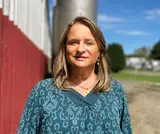
‘Everything I do is market-driven,’ adds Kelvin Ng, who shared the Farmers to Founders programme to connect farmers directly with founders and innovative startups. In many cases, it is the buyers, not the farmers, who drive the adoption of biological solutions. ‘Through our program, we provide biological inputs, technical support and education. Corporates recover their investment only after harvest and if the products prove effective. If they do not, there is no risk or exposure to the farmers.
Today, buyers and consumers are placing increasing pressure on exporters to reduce pesticide residues. At the same time, longer life expectancy and growing health awareness are changing consumer behaviour, driving demand for healthier and more sustainable food. These shifting consumer preferences will ultimately accelerate the transition to more sustainable agriculture. It is a very exciting time.’
The future of biological agriculture
‘As a Greek, I'm reminded of the philosopher Cleobulus, who believed that the best course in life is moderation. I think that principle also applies to agriculture,’ states Theodore Krintas. ‘With a growing global population, we need to produce more food, but neither conventional agriculture nor a fully biological system alone can meet that challenge overnight. Instead, we need to find a balanced approach that combines the strengths of both conventional and biological practices. Only by integrating the best of both systems will we achieve sustainable food production.’
According to Rebeca Gálvez, moderation is important, but so is another principle—radical collaboration. ‘Academia, governments, entrepreneurs and large companies must work together if we are to produce enough food sustainably. The era of the zero-sum game is over. Even competitors should collaborate rather than compete. By sharing knowledge, research and innovation, we can accelerate the transformation of agriculture.
I am optimistic because I see younger generations—including the grandchildren of farmers—returning to agriculture. Combined with new technologies, they will be better equipped than ever before. But that future will only become reality if we embrace radical collaboration.’

Building on Kelvin Ng's point, Avinash Mokate believes the transition to biological agriculture must ultimately be driven by consumers. ‘As demand for healthier and more sustainable food continues to grow, growers will adapt, and universities will need to modernise curricula that have changed little over the past two decades. However, education alone is not enough—we must also support farmers throughout the transition.
Collaboration is essential because sharing both successes and failures enables the industry to progress more quickly. We also need to shift our focus from maximising yield to producing more nutrient-dense food. By reducing our dependence on synthetic fertilizers, improving soil organic carbon and building healthier soils, we can produce more resilient crops and healthier food. Otherwise, we risk increasing food production while paying the price through poorer public health and rising healthcare costs.’
Philip Howes draws inspiration from the cannabis industry and the concept of tikkun—repair or restoration. ‘We have enough division in the world, including in agriculture. There is no single solution or silver bullet. Instead, we need a balanced approach that brings together the strengths of both synthetic and biological agriculture through education, collaboration and an open mind.
Food miles, nutrient density, environmental stewardship and productivity are not competing priorities—they are complementary. While buyers are increasingly driving change, regulators must recognise that regulation should respond to society's needs, not define them. If we work together, the solution will emerge through collaboration rather than any single product, philosophy or organisation.’
Summary
Biological crop protection and biostimulants are transforming agriculture, but their successful adoption depends on more than innovative products. Education, supportive regulation and collaboration across the value chain will be essential to build farmer confidence, accelerate innovation and create more resilient and sustainable food systems.
The Kestria Agribusiness & Agriscience Global Practice Group partners with organisations across the agricultural value chain to identify leaders who can accelerate the adoption of sustainable farming practices and biological solutions. Combining deep sector expertise with a global network, our consultants help clients secure the talent needed to drive innovation, navigate evolving market and regulatory landscapes, and build more resilient agribusinesses.