The ability to set global standards, optimise resources and adapt to shifting geopolitical and climate challenges is redefining how we cultivate crops. Success in this rapidly changing landscape depends not only on breakthrough technologies but also on strong partnerships, knowledge sharing and a long-term vision for resilient and efficient food systems.
The future of agriculture is being shaped by innovation, collaboration and a growing need for sustainable food production. As industries evolve, sectors like horticulture are at the forefront of technological advancements, from robotics and automation to controlled environment agriculture (CEA).
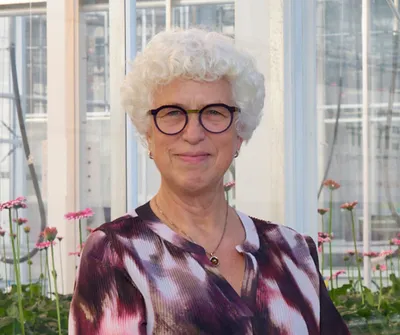
Patrick Westerburger, Managing Partner at Kestria Netherlands, interviewed Annie van de Riet, Chairman of AVAG, who shares insights on the role of collaboration, innovation and technology in shaping the future of horticulture. She highlights how strategic partnerships, standardisation and advancements in controlled environment agriculture are driving sustainable food production and reinforcing the Netherlands’ leadership in the sector. As someone who understands the complexities of Public-Private Partnerships (PPPs), navigates business dynamics and drives success from strategy to execution, she exemplifies the leadership needed in this evolving landscape.
Collaboration as the driving force of innovation
The Dutch horticulture sector is globally renowned for its innovations. How important is collaboration in driving this progress?
Collaboration is essential. There’s a well-known saying: “If you want to go fast, go alone; if you want to go far, go together.” That holds true here. At AVAG, we bring together companies, research institutions, and government bodies to accelerate innovation. This is what we call pre-competitive collaboration - companies jointly develop the foundation, such as standards and technology platforms, allowing them to focus on their unique applications. This ensures that resources and expertise are used efficiently.
Technology and export: A long-term vision
Can you give a concrete example of how this works in practice?
Based on a vision that technology would be a key export product for the Netherlands we proved that it was not just the product but more specifically the technology behind it. Of course, we didn’t know at the time that COVID-19 would disrupt geopolitics, but even then, we were already working on such strategies. Our vision proved to be correct - we are now exporting our advanced technologies worldwide.
Standardisation and robotics in horticulture
The Netherlands plays a leading role in developing horticultural technology. How do you translate this leadership into the international market?
We develop the standards that are used worldwide. If you want to build a greenhouse in the U.S., for example, the local government will ask which regulations apply. Since we set these standards in the Netherlands, our companies gain a significant advantage. Dutch companies license their technology to greenhouse builders worldwide, ensuring our innovations are widely adopted. This allows us to determine both the pace and direction of innovation.
Take robotics in greenhouses as another example. Many companies develop their own robots, but how do you ensure they can work together? Standards and protocols for data exchange and interaction are necessary. Without these agreements, one robot might only be able to operate at night because another is working during the day. By creating these protocols, we ensure that different systems are compatible and can function optimally.
The shift from globalisation to localisation
With increasing climate and geopolitical challenges, shouldn’t we focus on producing food locally instead of transporting it over thousands of kilometers?
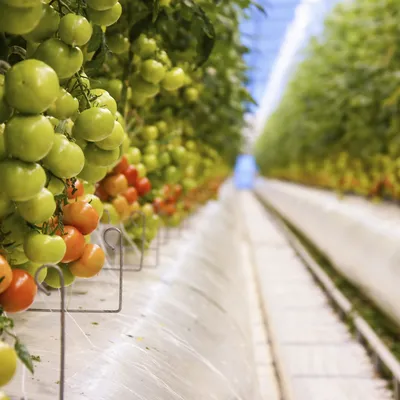
Absolutely. The climate transition forces us to rethink food production. We need to grow more food locally, minimise the risks of crop failures, and ensure high yields in controlled environments. Geopolitical tensions in recent years have made this shift even more urgent. We are no longer in an era of globalisation but of deglobalisation - and that perfectly aligns with our sector.
Our technologies make it possible to produce food anywhere, any place, any crop, any climate. By using advanced horticultural solutions, we can ensure stable food production regardless of location or environmental conditions. Whether it’s in the Middle East, Scandinavia or urban centers, controlled environment agriculture provides the reliability we need in an increasingly uncertain world.
Collaboration with research institutions and financial models
AVAG collaborates closely with research institutions. How do such partnerships work?
These are very strong partnerships. Every year, we create an innovation program together. AVAG understands the needs of businesses, while research partners bring in knowledge from other sectors. Through our innovation hub we are able to connect these worlds and ensure funding, often through Public-Private Partnerships (PPPs).
Part of the funding comes from licensing revenues of software developed in previous collaborations. This software was initially created with subsidies and company investments and is now being commercialized. Some of the revenue is reinvested into further development, while another portion funds new innovations.
Attracting young talent to the sector
Another key aspect is the connection between education and industry. How do you ensure young people choose a career in horticulture?
Interest is growing significantly. In the past, young people primarily focused on traditional sectors like arable farming and livestock, but now they are driven by broader societal challenges. How do we feed the growing global population? How do we make agriculture more sustainable? These questions are drawing young talent not just to traditional farming but also to the technological and innovative aspects of our industry.
The Netherlands as a Global Knowledge Hub
The Netherlands is internationally recognised as a leader, with Wageningen University as a major global player. With today’s climate challenges, the need for sustainable cultivation is growing. What does that mean for the sector?
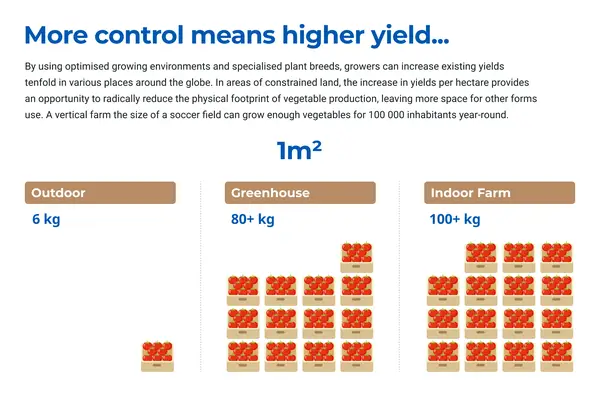
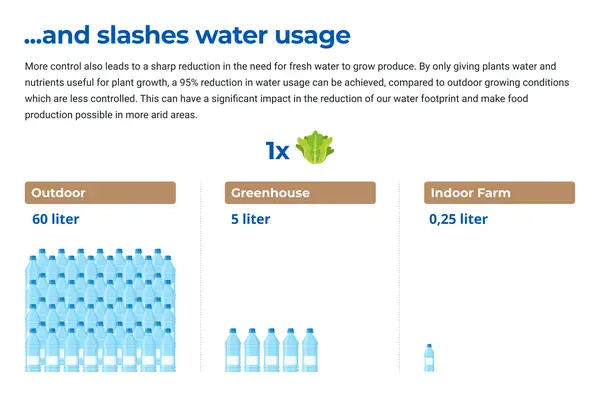
Controlled Environment Agriculture (CEA) is becoming increasingly important. This means growing crops in a fully controlled environment, minimising water, energy and pesticide use. It reduces environmental impact while enabling higher and more sustainable yields, even in regions where traditional farming is no longer feasible.
Future prospects for Dutch horticultural technology
Finally, how do you see the future of Dutch horticultural technology?
I’m very optimistic. We have the knowledge, strong collaboration networks and the entrepreneurial mindset to stay ahead. Already 80% of the greenhouses globally used Dutch technology and yes, the Netherlands will remain a pioneer in horticulture. By working together, innovating continuously and making smart investments, we can keep feeding the world with sustainable solutions.
AVAG is the Dutch association for greenhouse construction and technology companies, representing firms renowned globally for their integrated growing systems, components, and services. AVAG supports its members in quality assurance, innovation, internationalisation and workforce development, contributing to the Netherlands’ leadership in horticultural solutions. Notably, 80% of all greenhouses built worldwide incorporate Dutch technology, showcasing the country’s pioneering role in sustainable and efficient horticulture.