Insights from the Kestria Global Leadership Barometer 2025 reveal that the three most critical leadership traits for the future are adaptability to uncertainty and change, empathy and emotional intelligence and the ability to challenge ideas and drive innovation. These qualities were ranked consistently across regions, underscoring their universal importance for organisational success in an increasingly volatile and complex environment. Senior executives worldwide were interviewed to explore how these traits are shaping leadership today and enabling organisations to remain resilient and prepared for the future.
Leadership effectiveness today is defined less by authority than by the ability to navigate complexity with vision and integrity. Traits such as adaptability, empathy and innovation have become decisive for organisational resilience. In a world shaped by technological disruption, shifting workforce expectations and social and environmental pressures, leaders must balance strategic clarity with human-centred values to secure sustainable success.
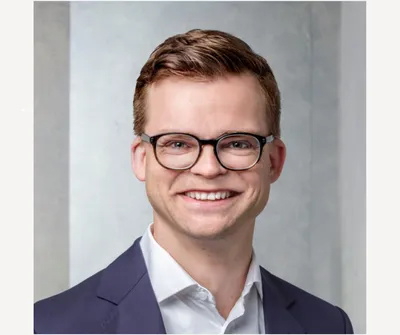
Fabian Ringwald, Chief Information Officer at SWICA, Switzerland, emphasised that while all leadership traits are highly relevant, he places particular importance on adaptability to uncertainty and change. ‘To be adaptable as a leader, one must use every tool in the leadership toolbox: challenging not only others but also one’s own ideas and assumptions, from both business and leadership perspectives, to foster innovation. Empathy is equally essential for success. Hence, I deviate slightly from the global perspective, viewing the first two traits and the remaining ones as the necessary foundation for achieving overall adaptability to uncertainty and change.’

Similarly, Andreas Meier, Vice President Guarantees and Documentary Instruments at Siemens Energy, Germany, agrees that the three leadership skills identified are correct but notes that he would prioritise them differently. ‘For me, the foremost priority is adaptability to uncertainty and change. The digital world, particularly the rise of AI, will bring unprecedented shifts and unless leaders and employees are adaptable rather than fearful, organisations will struggle to thrive and to retain talent.
Second is empathy and emotional intelligence. These are the human qualities that distinguish us from machines and are essential to keeping people engaged, motivated, and capable of adapting to change.
Finally, there is the ability to challenge ideas and drive innovation. Once adaptability and empathy are firmly in place, organisations can truly generate, test, and advance the ideas that fuel innovation.
Thus, while I agree that these three traits are critical, I would rank them in the reverse order.’

Bettina Blosse, Vice President/General Manager, Nordic countries at Idorsia Pharmaceuticals Nordics AB, Sweden, affirmed that the leadership traits ranked in the Kestria report align with those she considers most critical. ‘As market uncertainty increases—driven by shifts in the international landscape, financial constraints, limited resources and rapid digitalisation supported by technologies such as AI—leadership traits will evolve in line with this new environment. AI-driven changes will have a profound impact on many companies and may significantly reshape the business landscape in the future.
While specialist skills may be replaced, the importance of leadership qualities will only grow. Future leaders will bear a critical responsibility for guiding their organisations in moral, ethical, sustainable and visionary directions, focusing on qualities that are inherently human rather than purely technology-driven.’
Why does empathy matter more than ever in leadership today?

Nihad Abdel Wahab, Chief People Officer at Medmark, Egypt, stressed that empathy is no longer a “soft” leadership skill but a strategic imperative. ‘Employees today seek to feel valued not only for their output but also as individuals with distinct challenges and aspirations. Leaders who demonstrate empathy foster trust, psychological safety and stronger team cohesion.
Take, for example, organisations transitioning to hybrid work. In one HR initiative I supported, managers who took the time to understand their teams’ personal circumstances—such as parents balancing childcare, employees working across time zones or individuals experiencing isolation—were markedly more successful in sustaining both productivity and morale. By contrast, leaders who adopted a one-size-fits-all approach encountered disengagement and higher attrition rates.
From an HR perspective, empathetic leadership is also central to diversity, equity and inclusion (DEI) initiatives. By listening to and addressing diverse employee experiences, leaders create environments in which individuals feel heard and empowered to contribute their best. Indeed, research indicates that employees are significantly more likely to remain with an organisation when they believe their leaders genuinely care about their well-being.’

Anne Gnanapragasam, Head of People, HSBC GSC Malaysia, states that as multiple generations enter the workforce, Gen Z differs markedly from Millennials. ‘They are purpose-driven and approach success through a broader set of challenges and perspectives. Once again, empathy emerges as a critical competitive advantage.
Whereas Gen X and Millennials tended to be more hierarchy-oriented, the incoming generation is not. Furthermore, loyalty to organisations is no longer the norm and frequent movement between employers has become common. Leaders who fail to demonstrate empathy risk losing these employees even more quickly. ’
Bettina Blosse highlights that future generations of colleagues will be well-equipped in sustainability and sustainable leadership. ‘The competitive landscape will increasingly regard effective leadership as just as important as salaries, products and services.
Empathy should always be a defining quality of a great leader. Strong leaders manage their own emotions while understanding and respecting the feelings, perspectives and needs of others. I also believe that future generations will place greater value on work–life balance and will not accept working environments that fail to respect this principle.
Ultimately, the question becomes one of the moral values embodied by both leaders and their organisations. At the core of these values lies empathy.’

Fabian Ringwald underlines that without empathy there can be no genuine relationship and without relationships we fail to understand what drives our talents, peers and customers. ‘Empathy matters because it adds a crucial dimension to our otherwise logic-based approach to strategy. It enables us to balance care with courage in supporting our employees, while also allowing us to place ourselves in the position of our customers to truly understand their expectations and needs.’
How do top leaders stay adaptable in fast-changing environments?

Nihad Abdel Wahab points out that adaptability has become the defining trait of modern leadership. ‘With market disruptions, economic fluctuations and rapid advances in AI and automation, leaders must not only anticipate change but also pivot strategies quickly.
In HR we often see this need for adaptability during organisational restructuring or digital transformation projects. For example, when a multinational firm I advised adopted a new HRIS system, leaders who embraced continuous learning and modelled curiosity helped their teams adjust more smoothly. They acknowledged the learning curve, encouraged experimentation and celebrated small wins. This adaptability transformed what could have been a stressful transition into a growth opportunity for the entire workforce.
Top leaders also remain adaptable by cultivating agile teams. They empower employees to take ownership of challenges, encourage innovation and frame change as an opportunity to develop new skills rather than a threat. HR plays a vital role by reinforcing a growth mindset through training, coaching and recognition systems that reward flexibility and creative problem-solving.’
Per Andreas Meier, staying adaptable in fast-changing environments is challenging but top leaders achieve it by combining empathy with principled action. ‘They must build trust by motivating their teams, leading by example and listening attentively. Leaders should take employees’ concerns seriously, remain open to feedback and demonstrate consistency in both values and behaviour. This balance of empathy, trust and integrity enables true adaptability.’

‘KPI-driven industries need to re-evaluate how great performance is measured and analysed,’ says Bettina Blosse. ‘Traditional methods of assessment, such as hours worked or number of customers visited, will not be sustainable. Instead, quality measures must be aligned with company values, vision and mission.
Leadership must remain strategically robust, tactically clear and open to technology, new visions and continuous learning. Leaders also need to be knowledgeable about change management and capable of making rapid shifts in direction when required. Recruitment is another critical factor: securing the right people in the right environment. Organisations need individuals who can adapt, think creatively and remain constantly curious and eager to learn.
In the life sciences industry in particular, patients are becoming more empowered, taking greater control over their choice of healthcare providers and treatment. The key questions are how we reach them and with which tools. A company’s overall sustainability credentials, including its leadership, will become increasingly important.’
According to Fabian Ringwald, leaders can remain adaptable in fast-changing environments by following three key steps:
‘First: Surround yourself with people who are stronger than you in almost every area. This is essential for building the foundation of a high-performing team.
Second: Step back and allow them to take the lead in their fields of expertise. This gives you the freedom to focus on team dynamics and overall strategy.
Third: Anticipate change and make it your personal habit to lead it. Doing so provides your team with the necessary orientation and enables you to develop continually—both in your strategic vision and in your leadership style. Ultimately, this will make both you and your team resilient in fast-changing environments and times.’
Summary
The Kestria Global Leadership Barometer 2025 underscores that the future of leadership lies not only in operational excellence but in embodying traits that enable organisations to thrive amid disruption. Adaptability, empathy and the courage to challenge ideas are more than individual competencies; together they form the foundation of resilient, human-centred leadership. As the insights from senior executives reveal, these qualities are already shaping how leaders guide their teams, balance innovation with responsibility and ensure long-term sustainability.