We invited four esteemed members of the Kestria network to provide their insights and experiences from diverse regions and industries. Their perspectives illuminate the evolving challenges and opportunities confronting leaders in this era of transformation.
The rapid advancement of artificial intelligence and automation is transforming workplaces across industries. This shift is redefining how work is organized, how decisions are made, and what skills are needed to succeed. Leaders today must adapt to these changes by embracing new technologies while guiding their teams through the evolving demands of the modern workforce.

Sandro Eggimann, Partner at Kestria Switzerland, says that AI and automation are no longer optional; they are here, embedded in everyday workflows and pushing companies to rethink how work gets done. ‘At Viavanta, we see it up close. In client mandates, in C-level discussions and in every strategic search we run.
One clear trend: AI is no longer limited to tech functions. It’s reshaping manufacturing, logistics, healthcare and professional services, anywhere you find repetitive processes or data-heavy decisions. But the biggest shift isn’t just technical. It’s structural. Job roles change, hierarchies flatten and cross-functional teams become the norm.
Leadership is the real make-or-break factor. It’s not about being the most digital person in the room. It’s about being adaptable, curious and confident enough to lead through ambiguity. We’re not looking for superheroes. We’re looking for people who can build trust while letting go of control, who see tech as a lever, not a threat.
Executives today need to bridge people and systems. They need to understand enough to challenge, but also to listen. In our mandates, the most future-ready leaders are the ones who ask better questions, not those with all the answers.
We’re seeing clients replace rigid organisational charts with fluid teams. We’re seeing demand for leadership profiles that combine strategic clarity with emotional intelligence. And we’re seeing that real transformation doesn’t come from tech alone. It comes from people who know how to use it, without losing the human side of leadership. That’s the work we do every day.’
Redefining executive leadership in the AI era
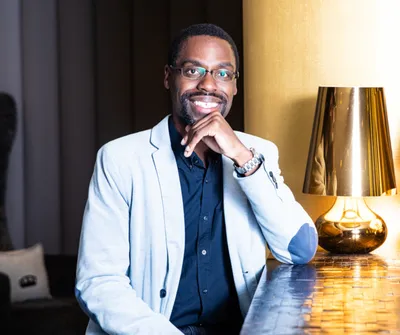
Japheth A. Worthy, Associate Director – MedTech at Kestria Japan, points out that in the country’s unique business world, top leaders need to rethink their approach as artificial intelligence becomes more common. ‘Japanese companies are increasingly adopting artificial intelligence technologies, including those capable of generating text and images, to address challenges such as workforce shortages and to enhance productivity. However, due to Japan’s emphasis on group consensus and deliberate decision-making, the adoption of new technologies often progresses more slowly than in Western countries.
Leaders must steer their organizations to leverage AI in a manner that genuinely supports employees rather than solely focusing on cost reduction. AI should be regarded as a tool that enables employees to concentrate on higher-value, creative tasks. This requires establishing an effective balance between automated processes and human contributions. To lead effectively, executives must also embrace AI as a strategic decision-making partner, capable of delivering data-driven insights with greater speed and accuracy than traditional approaches. When utilized appropriately, these insights facilitate more informed strategic decisions, ranging from resource allocation to the identification of new market opportunities. To realize these benefits, companies must ensure robust data management, foster continuous employee skill development, and cultivate a culture that encourages experimentation and prudent risk-taking.’
Workforce transformation through automation

Krista Kristiana Ziedina, Business Partner at Kestria Latvia, emphasises that reviewing traditional workflows and processes is now a strategic necessity to maintain efficiency and respond to market dynamics. ‘For example, in the Baltic states, some companies are already highly automated with strong technological capabilities, while others are only beginning to consider these developments. In any case, it is evident that those who embraced automation, artificial intelligence, and the latest technologies early are the ones reaping the benefits today.
However, one of the key challenges in this transformation process is human resource management and employee skills development. The introduction of automation often raises concerns about job displacement.
Yet experience demonstrates that it can also create new roles and responsibilities, enabling employees to focus on higher value-added tasks such as client relationship building and strategic decision-making.
During this period of change, leaders have the critical task of investing in reskilling and upskilling their teams, particularly in labor markets affected by demographic trends and talent shortages. Equally important is the creation of a work environment where change and openness to innovation are perceived as opportunities for growth rather than threats. It is valuable for managers to regularly communicate the benefits of automation and technology, involve employees in decision-making, and encourage them to share ideas, experiment and take initiative. Embedding a culture of continuous learning and experimentation can help teams respond creatively to evolving demands.
Automation is a complex transformation process, yet it also brings excitement as it coincides with new experiences, knowledge, and skills. Automation is not the future, it is the present and an essential component of competitiveness.’
Ethical and strategic considerations for leaders

Tara-Lynn Dent, Associate Business Partner at Kestria Canada & USA, highlights that while AI holds great promise for boosting productivity and efficiency, its growing adoption also brings rising concerns around privacy, bias and misuse. ‘AI is evolving at lightning speed. Leaders across industries are feeling the pressure to adopt tools rapidly, streamline operations and boost productivity. However, speed without safeguards can lead to critical missteps. The real challenge lies in balancing efficiency with ethical responsibility. Before rolling out new tools, ask: does your organisation have an AI policy? How does it align with your data governance protocols? We’re seeing more companies adopt internal AI guidelines and, in some cases, ban specific tools outright to protect sensitive data and intellectual property. Clarity around what can and cannot be entered into AI tools is essential.
Choose tools that comply with data protection laws and international privacy standards. Ensure they feature robust, built-in security measures to safeguard sensitive data. In the United States, the National Institute of Standards and Technology (NIST) has developed an AI Risk Management Framework to help organisations better manage AI-related risks. Since AI systems reflect the data they’re trained on, they can replicate or even amplify historical biases, raising both ethical and inclusivity concerns. Regular audits are essential to identify and correct inaccurate or biased outputs. It is also important to define accountability: who is responsible for AI oversight in your organisation - a single team or a cross-functional group?
AI should augment human intelligence, not replace it. Human oversight must remain in place for high-stakes decisions. Building trust starts internally: teams should be trained on how AI is used across the business, including where it adds value, where it falls short and how it is being managed. Transparency with clients and external stakeholders is equally essential, as it demonstrates that AI is being applied responsibly and with clear intent.’
Summary
The future of work depends on the capacity to adapt and evolve alongside technological advances. Organisations that combine innovation with thoughtful leadership and a focus on their people will be best positioned to navigate complexity and achieve lasting success. Commitment to continuous development and responsible adoption of new tools is essential for sustainable growth in the age of AI.